 C&C Chess Club
Activity beats material
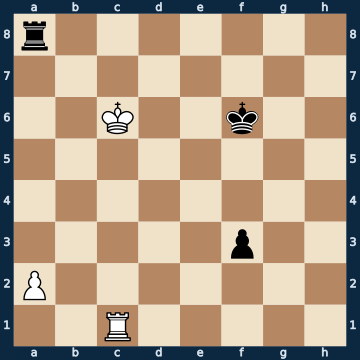
r7/8/2K2k2/8/8/5p2/P7/2R5 w - - 0 1The plan
Both sides have a rook and a pawn, and your own pawn is attacked. The reflex is to defend it — and this very reflex loses the game. Measured: of twenty-one moves, exactly ONE holds the draw, the twenty others LOSE, not merely 'only' draw. Among them are both moves that defend the rook and both advances of your own pawn. The reason is simple: the enemy pawn already stands on the third rank and is two steps from the queening square, and whoever guards their own pawn in this situation arrives one move too late. The holding move places the rook on the enemy pawn's queening square: the pawn is stopped, it can no longer be defended, and White wins it back on the next move. That your own pawn falls in the process does not matter — with bare rooks the game is a draw.
Rule of thumb: in the endgame, time is more expensive than material. Don't ask 'how do I defend my pawn', ask 'which is the most dangerous pawn on the board' — and get in its way. The counterpart from the winning side is called 'When to trade'.
Why this level: Playing against the reflex: you have to see the rookless draw in advance
The solution, move by move
- 1. Rf1 The ONLY move that holds, out of twenty-one — and it simply leaves your own pawn standing. The rook occupies the square on which the black pawn wants to become a queen; from now on the pawn gets no further and is itself under attack. All twenty other moves lose, including both that defend the a-pawn (sidelines).Sideline 1. Ra1 The rook places itself behind its own pawn and defends it. Looks sensible and loses. 1… f2 The ONLY winning move for Black — and it is not hard to find: the pawn goes to the seventh rank. The white rook is now tied to the back rank, otherwise it promotes. 2. Kd5 Kg5 The black king comes up and escorts the pawn in. White has a rook that can only watch: the game is lost.Sideline 1. a4 The second reflex: your own pawn should run too. It is a race White loses by two moves. 1… Rc8+ The in-between check costs White the rook or the time — and it has neither to spare. 2. Kd5 Rxc1 Rook gone. Its own pawn was not worth a single move.
- 1… Rxa2 Black takes what is offered. It has nothing better: its own pawn cannot be held anyway.
- 2. Rxf3+ And back. That is exactly what the rook stood on the f-file for — it stopped the pawn AND captured it in the same move. Only two moves hold here, this is the clear one.
- 2… Ke5 The king comes out of check into the centre.
- 3. Kc5 Rook against rook, no pawns: a draw, regardless of what is still played from here.
- 3… Ra5+
- 4. Kc4
- 4… Ke4
- 5. Rf8 White places the rook far away and waits. There is nothing left to win here and nothing left to lose — that was exactly the goal.
- 5… Ra1
Play it yourself
In the free app C&C Chess Club you step through the line move by move, tap the sidelines and play the position out against Stockfish — no account, no ads.
More in Endgame principles
- The bishop only sees half the world White wins
- Two pawns on one file White wins
- The king has to come along White wins
- Kling and Horwitz — won, but not winnable White wins
- The saving trade Draw
- The lone knight — same material, a genuine win White wins